自動化購買を繰り返し可能な意思決定システムに変える方法
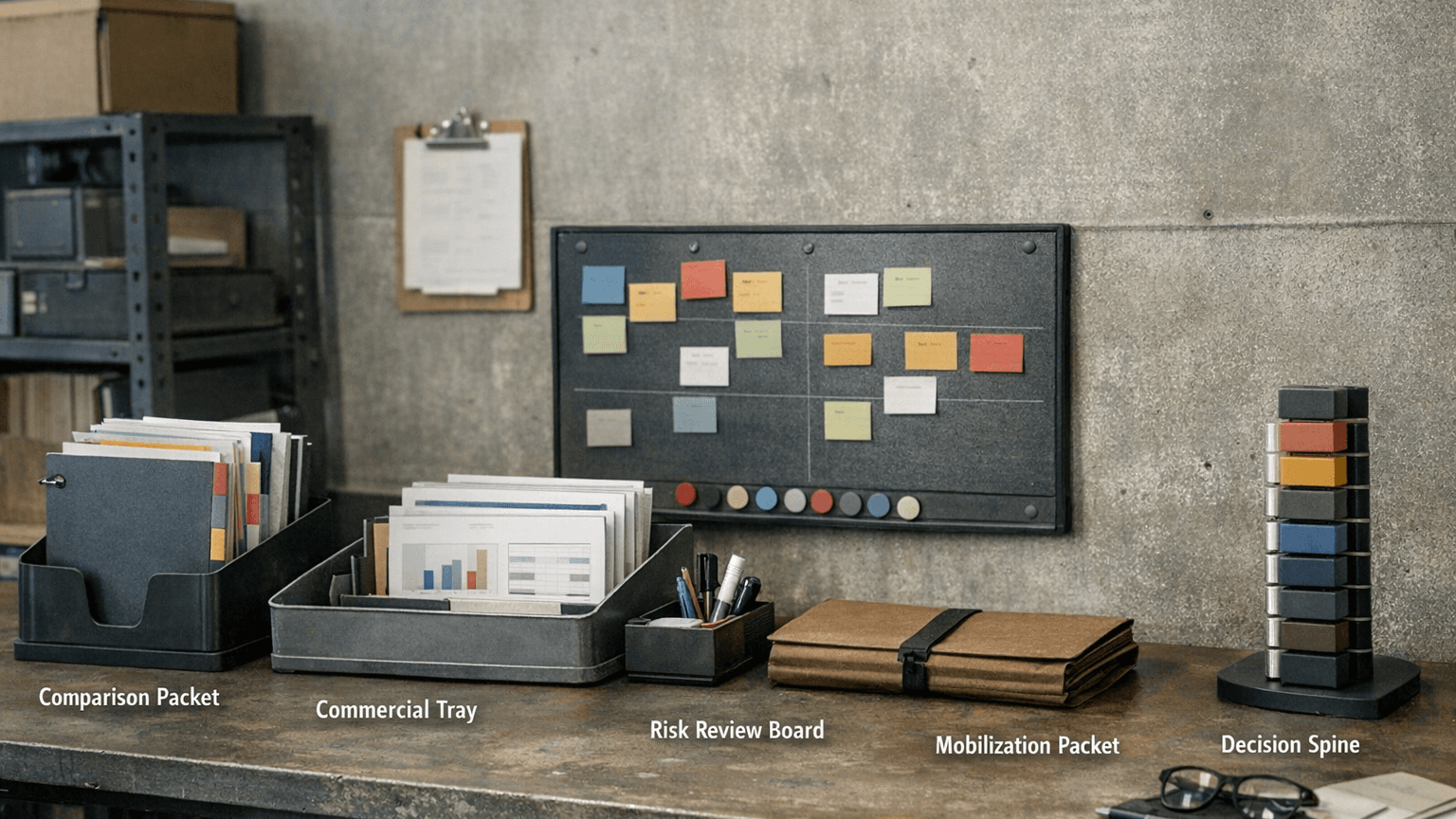
最小アーティファクトスタック
5つの再利用可能な要素を基盤にしてください:受け入れオブジェクトに結びついたチャレンジ定義;それらのオブジェクトにロックされた評価マトリクス;公開ルールを持つ明確化・変更ログ;反対意見と根拠を含む発注記録;そして動員とリスクレビューのための発注後フック。プロジェクトIDでバージョンを保存してください。テンプレートを破るアドホックな比較を拒否するようスポンサーを訓練してください。

層をオーナーにマッピングする
意図と成果はオペレーションスポンサーに残ります。比較と明確化の規律は調達が担当します。意思決定記録はスポンサーと調達をペアリングします。デリバリー動員はオペレーションリーダーシップが担当します。プログラムレベルのリスクリズムは、規模が要求する場合にプログラムオフィスまたはPMOに属します。
実用的な順序で制度化する
過去の2つの発注を誠実に再構築してください——実際に決定を導いたもの、重要でなかったもの、比較可能性が壊れた場所。ノイズを生み出したステップを削除してください。編集されたサンプルと共にテンプレートv1を公開してください。v1でパイロットプロジェクトを実行し;差分を記録してください。明示的な変更ノートと共にv1.1を公開してください。改善は完璧を上回ります。
繰り返し可能性が失敗するとき
比較可能性をスキップするスピードをリーダーシップが報奨するとき、マトリクス列がベンダーのカリスマで逸脱するとき、または1人のヒーローだけが記録の在処を知っているとき、失敗します。テンプレートを責める前にインセンティブとストレージを修正してください。
工場サイドの現実:フォルダーはシステムではない
多くの工場は方法と共有ドライブを指示できます。次のプロジェクトが何が比較されたか、どの前提が変わったか、またはなぜ1つのサプライヤーが勝ったかをまだ見つけられない場合、あなたはドキュメントを持っています——繰り返し可能な意思決定システムではありません。
DBR77 Marketplaceが習慣を表現する方法
構造化されたチャレンジ、比較可能なオファー、そして検査可能な発注ロジックは、内部習慣になるべきものの外部の顔です:プロジェクト全体でバージョン管理され、比較可能で、説明責任のある意思決定。
最も近い締めくくりの参照については、自動化プロジェクトが取締役会の承認を受ける準備ができているかどうかを判断する方法、サプライヤーの明確化がオファーの比較可能性を損なわないようにする方法、および受注後に製造業者サイドの動員計画が含めるべきことをご覧ください。
システムは誠実な事後分析から学ぶ
各プロジェクトの後、何が重要だったかを記録してください:どの前提が問題を引き起こしたか、どの比較フィールドが役に立たなかったか、どのゲートが機能したか。バージョン管理されたノートでテンプレートを更新してください——次のチームが伝説ではなく学びを受け継ぐように。フィードバックを組み込めないシステムはファイル名を持つ民話になります。
テンプレートをスピードのためのガードレールとして扱うようスポンサーを訓練してください——障害としてではなく。敵は混乱を再発明することであり、規律の1ページに従うことではありません。
意思決定から工場の行動へ
この購買プロセスの部分を強化すること——実践における「自動化購買を繰り返し可能な意思決定システムに変える方法」——は、実行を予測可能にするためです。工業現場では、曖昧さは抽象的なままにはなりません:それは待機、手直し、静かな回避策、そしてラインが数週間前に明確さを必要としていたときの設備の傍での議論になります。チームが同じ事実を公表し、承認を証拠に結びつけ、責任を可視化しておくと、サプライヤーはサプライズが少なくなり、内部機能は競合するストーリーの調整に費やす時間が減ります。
一つの習慣だけを持ち帰るなら、これにしてください:主要な購買アウトプットを、オペレーションとメンテナンスが監査できるものとして扱う。彼らがそれを現場の行動に結びつけられない場合は、できるまで言語を厳密にしてください。その単一の規律が、後から技術的に見えるが実際には最初から意思決定の問題だった多くの失敗を防ぎます。
最後に、この規律を説明責任に結びつけてください:誰が現場で仮定を検証するか、どのマイルストーンまでに行うかを明記してください。誰も測定の責任を持たない場合、神話は繁栄します;検証がプロジェクト計画の一部となり、後付けでない場合、神話は弱まります。
結論
次のプロジェクトが最後のプロジェクトのバージョン管理された記録から始めることができない場合、まだシステムはありません——記憶があるだけです。軽量スタックを構築し、バージョンを管理し、比較可能性を戦略的能力として扱ってください。
DBR77 Marketplaceは繰り返し可能な意思決定システムの外部表現です:構造化されたチャレンジ、比較可能なオファー、そして内部テンプレートのようにバージョン管理できる検査可能な発注ロジック。チャレンジを説明する または メーカーデモを開始する。