How to Run an Automation Pilot Project
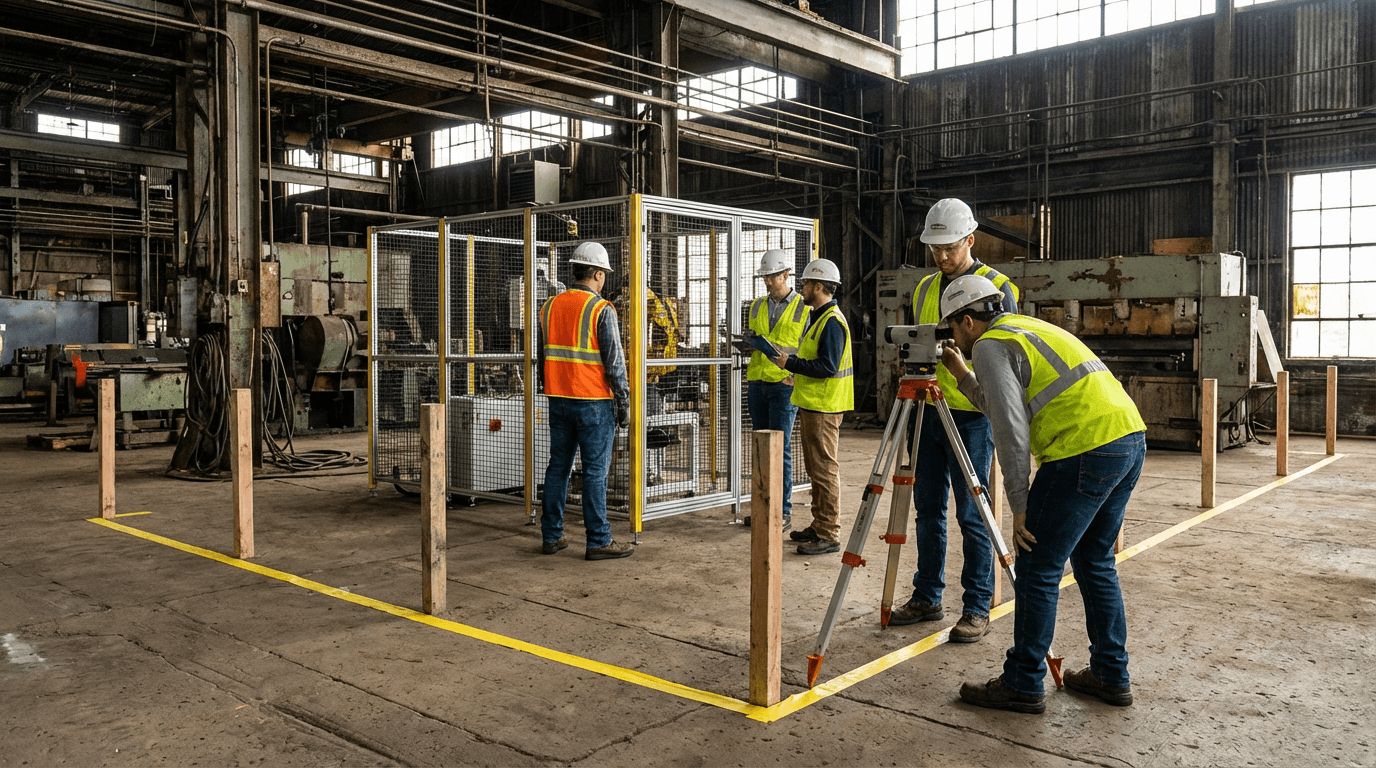
Anchor the pilot in one decision
Before you invite solutions, write the decision the pilot must support. Examples: can this bottleneck hold target pace with acceptable quality under real feeding constraints? Can we reduce labor intensity at this cell without creating a new quality risk? Can we integrate this equipment with our existing controls and ownership model without heroic IT effort?
A pilot that tries to prove the vendor, the business case, the rollout plan, and the cultural readiness in one swing usually proves nothing clearly. Narrow the question until an honest answer is possible in the time and money you are willing to spend.

Choose terrain you can control
Politically hot lines and operationally chaotic processes make poor learning environments. You spend the pilot managing theater—escalations, exceptions, competing sponsors—instead of observing the system. Look for repeatable flow, willing operators and maintenance partners, and pain that is real but bounded enough that a setback does not define your year.
Define success before proposals, not after
If success criteria arrive late, vendors optimize for different finish lines and your team argues in circles. Agree internally on the operational outcome that matters most, the minimum acceptable performance band, the timeline window that is actually credible, and what evidence would justify a “go” on the next step. Then hold offers against that frame.
Keep the scope deliberately thin
One process boundary, one cell or line segment, one coherent product family if variability is the risk you need to test—pick the smallest envelope that still answers your decision. Breadth feels ambitious; in pilots it usually dilutes signal. You want crisp learning, not a preview of every future argument.
Compare suppliers for pilot fit, not only for roadmap charisma
Some organizations shine at large rollouts and struggle with tight proof phases; others are the opposite. Evaluate clarity of assumptions, milestone honesty, response agility, and willingness to tie progress to observable checks. A partner who cannot define “done” for the pilot will not define it for the program.
Surface assumptions like inventory
Site readiness, operator involvement, sample availability, IT security steps, support boundaries—these details decide whether a pilot is fair. When they stay implicit, the pilot looks safer than it is. Make them visible early so surprises happen in planning, not in the first production week.
Milestones turn intent into accountability
Scope alignment, frozen configuration points, readiness gates, go-live, early performance review—simple milestones keep the effort from drifting into endless experimentation. They also give sponsors a way to intervene without drama when reality diverges from plan.
Capture learning like it is the product
Schedule a structured review: what held, what broke, which assumptions changed, what would need to be true before scale. Without that loop, the pilot is an event. With it, the pilot is capital spent on a decision record the organization can reuse.
How DBR77 Marketplace supports first projects
DBR77 Marketplace helps teams move from pilot intent to a clearer first engagement: structured challenge definition, comparable offers, and visible assumptions so the pilot stays tied to a decision—not to vendor storytelling.
Bottom line
Run pilots to answer a small set of critical questions with manageable exposure. Narrow scope, explicit success, visible assumptions, dated milestones, and honest learning—that is how a pilot earns the right to scale.
DBR77 Marketplace helps manufacturers turn a pilot idea into a clearer first project through structured challenge definition, comparable offers, and milestone-ready workflow. Describe your challenge or Start manufacturer demo.
Frequently asked
How to Run an Automation Pilot Project?
an automation pilot works when it is scoped as a decision tool, not as a mini version of a full transformation